Work Play About Résumé ↗
Playground Global HRI

Role

UX Design Intern

Timeline

July 2021 – December 2021

Team

Software Team + UX Team

Tools

Figma · FigJam

Playground Global

HRI Robotics UX Research

Exploring warehouse automation through a human-robot interaction lens

The Problem

The industry standard for collaborative mobile robots is simply not hitting people and objects. There's an opportunity to design robots that foster deeper connections with warehouse workers.

The Solution

Robots can foster deeper connections within the warehouse and help workers when made more collaborative and human-centered in their design.

The Background

Working with early-stage startups

Playground Global is an early-stage venture capital firm that invests in deep tech and assists startups with software, hardware, machine learning, marketing, talent, and design.

I worked within the internal software team, which assisted various portfolio companies with diverse needs. As a UX design intern, I worked closely with a portfolio company to explore the warehouse automation space from a UX perspective.

A coworker and I were even getting soldering lessons while home robots Kuri and Misty were on display, a glimpse at how exploratory working at Playground was.
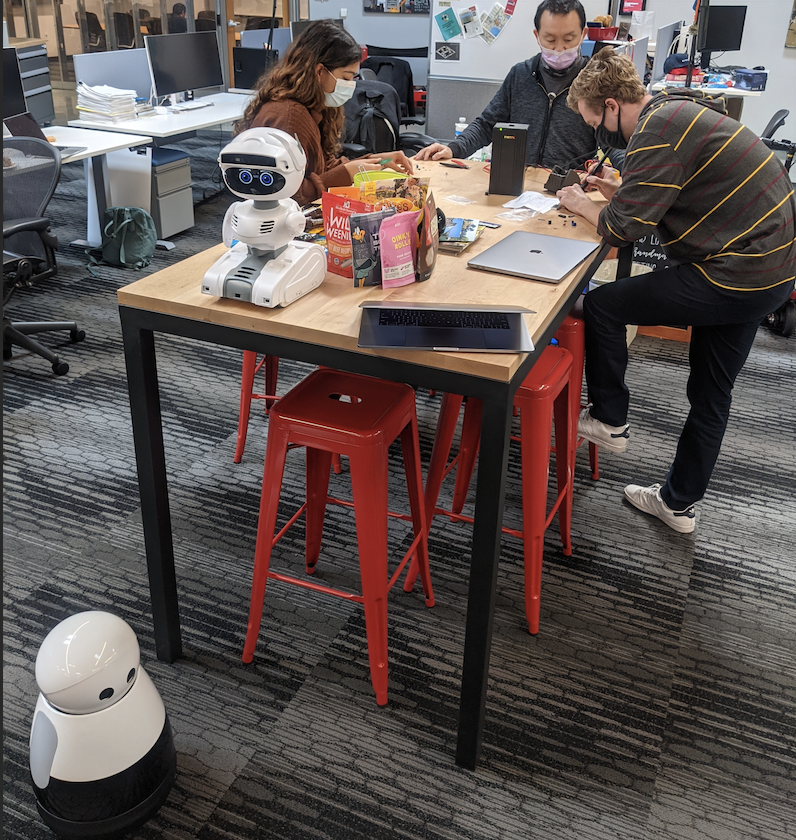
Playground office

Product Research

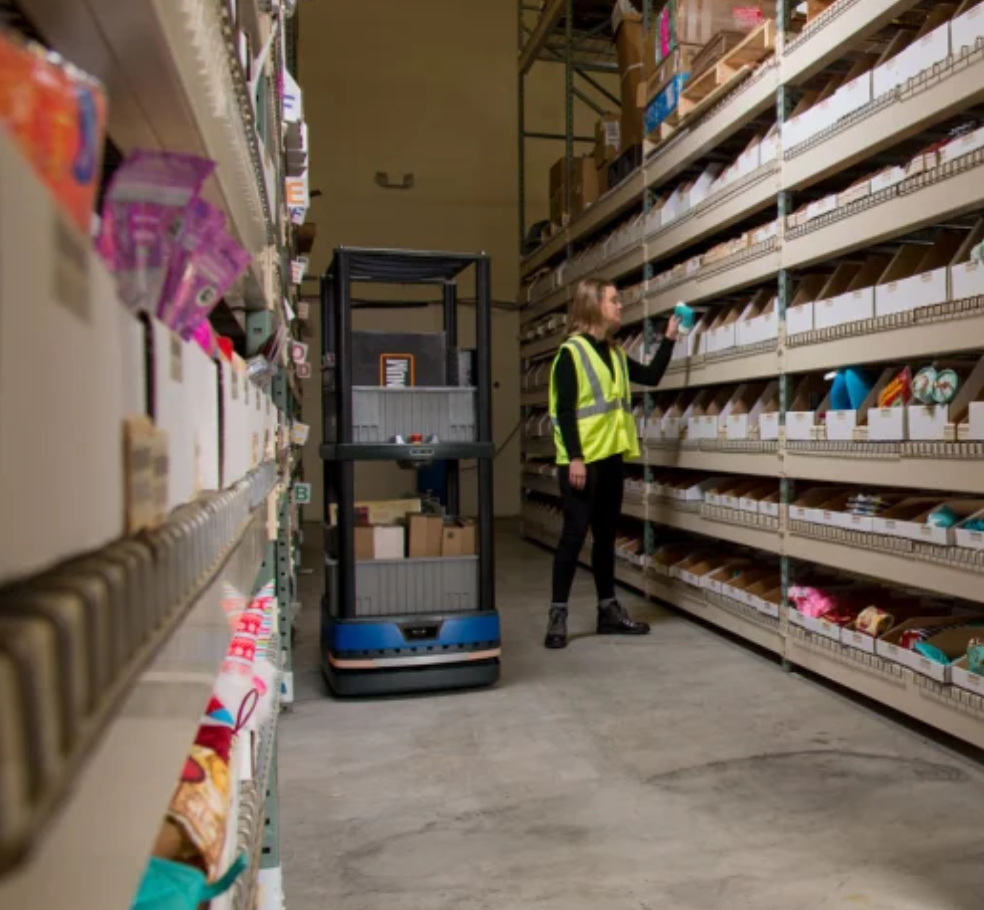
Understanding the warehouse space

Warehouses are in a unique position. COVID-19, worker shortages, and supply chain issues cause them to struggle, while the increase in e-commerce raises their demand exponentially. There's a clear need for a solution, but varied ideas of what that solution could be.

From my time at Playground, I researched three main areas to understand the space: literature analysis, informal user research, and industry research.

The goal was to explore proposed ideas and better understand our potential target users.

01 Literature Analysis

Robotics research & semantic mapping

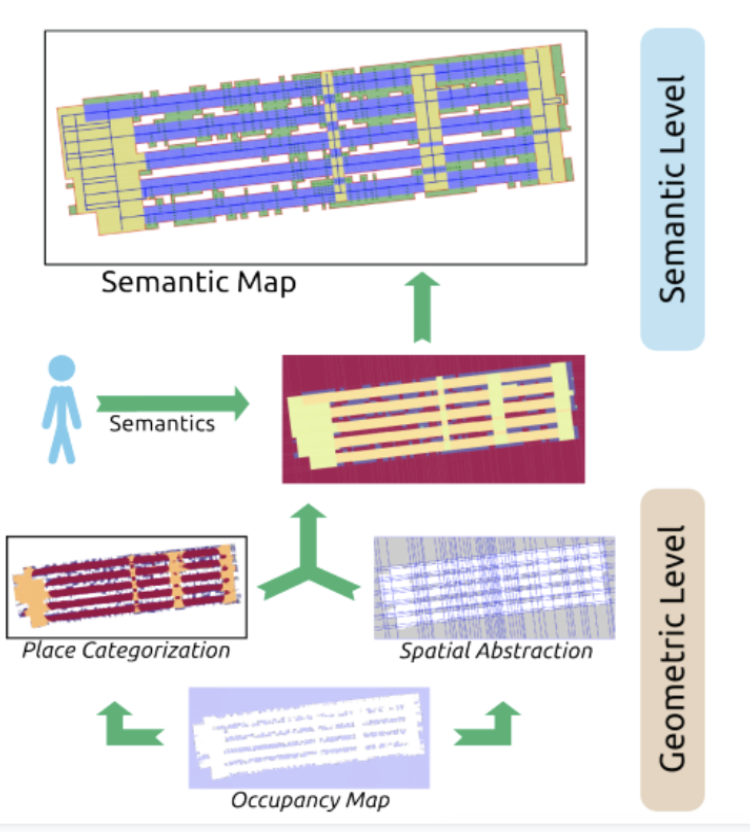
One proposed solution I explored was semantic mapping in warehouse settings, having robots store information in models similar to how humans perceive space.

If robots can create mental models similar to humans, they'd be more relatable and helpful within the space. I read a series of papers on semantic mapping and how it can improve human-robot interaction.

Conclusion: exciting research, but current technology limitations make this more of a future solution than a present reality.

Semantic mapping diagram

Flow proposal for semantic models from Seed Gholami Shahbandi's paper on Semi-Supervised Semantic Labeling

02 Informal User Research

Understanding the warehouse worker

To understand workers' everyday lives, challenges, and achievements, I explored a community of online creators sharing their experiences working in warehouses.

Key findings:

  • Jobs were repetitive with long hours, though some workers enjoyed the rhythm it created
  • High turnover rates meant limited coworker relationships
  • Online sentiment toward automation and robotics was largely open or neutral, not opposed
Warehouse worker research

03 Industry Research

What are other companies thinking?

I virtually attended the 6 Rivers Robotics Flow conference, where companies shared perspectives on worker satisfaction, throughput, and the efficacy of collaborative robots.

Interesting ideas that emerged:

  • Gamification: incentivizing workers with in-app badges for picking tasks
  • Optimization vs. retention tradeoffs: maximum throughput often comes at the cost of worker wellbeing
  • Robots for satisfaction: having robots do the "dirty work" so workers feel the robot is working for them, not the other way around
Industry research

Competitive Analysis

Mapping what's already in the market

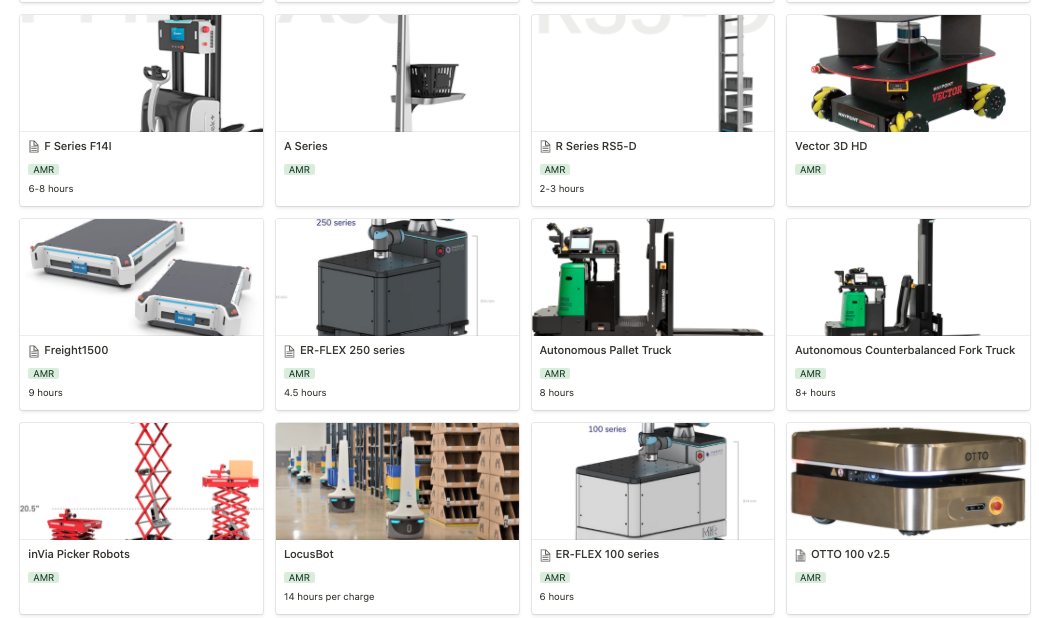
We found many robot bases with interchangeable additions, but not many cart-like robots. We decided to focus on prototyping a cart-style warehouse AMR.

Before designing, I created a spreadsheet of all collaborative mobile warehouse robots and their specs (weight, size, charge time) to find meaningful averages vital to our design decisions.

Competitive analysis spreadsheet

Informal User Testing

But how? Prototyping and testing with users

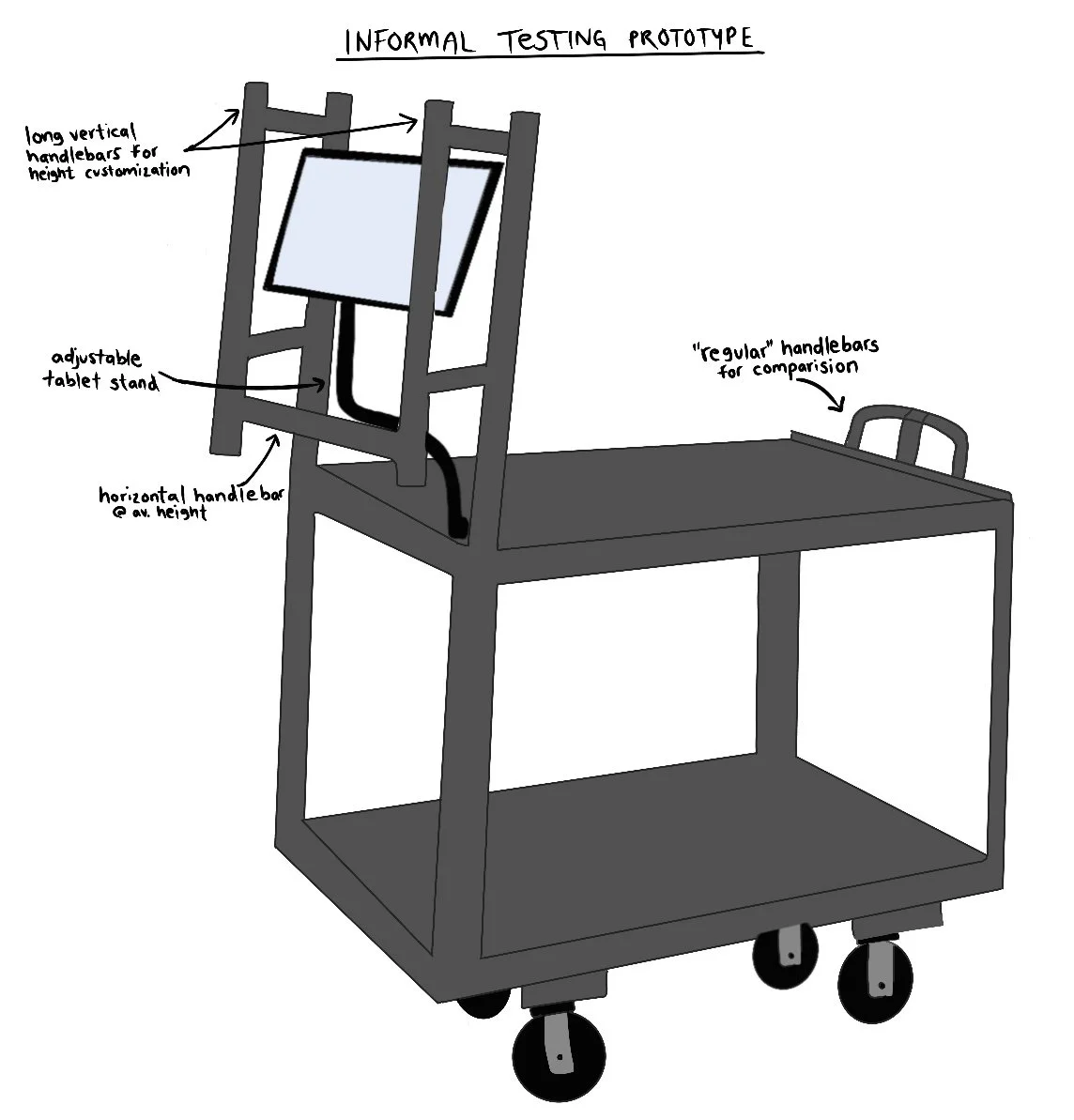
Once focused on cart-style AMRs, we had questions to answer before building any hardware. We made makeshift cart prototypes and conducted user testing to learn what worked and what didn't.

Users performed a picking task with two customizable carts. They could adjust screen position and handlebar placement. Afterward we asked what they liked, didn't like, and would change.

Questions we were focused on:

  • What handlebar placement feels most natural?
  • Vertical or horizontal handlebars?
  • How do different heights affect handlebar preference?
  • Where should the screen be placed?
  • Should there even be a screen?
  • What combination allows the most flexibility?
"I don't like these 2 bars here on the top. When I pick up something I have to avoid hitting them... they feel like a cage to work around."

I assumed more hand placement options would be better, but we found some users felt overwhelmed and confused. We also realized we'd need to make tradeoffs: optimal handlebar placement vs. ideal screen placement.

Cart prototype sketches

Takeaways and reflections

It's better to do some things imperfectly

Interning at Playground Global, I learned that not everything needs to be perfect, especially in early-stage startups. It's better to maximize efficiency by utilizing your resources and iterating fast.

This was my first time immersing myself in HRI and user testing with 3D physical products. The experience showed me that my passion for UX is never-ending, given the infinite opportunities available when design intersects with hardware, robotics, and emerging tech.

Playground reflections

Next case study

Samsung Research America

Digital Health & Platform Design

View case study →

Samsung